
Revision Test 1 BIO122
Chapters 1, 2 and 3

Question 1
Digestive system and respiration system are example of which level in biological hierarchy?
Question 2
A phgmy sea horse camouflages in its environment. What characteristic describes this ability?
Question 3
What is the lowest unit in biological hierarchy?
Question 4
Why is it important for living organisms to regulate their metabolic processes?
Question 5
State how bacteria reproduce.
Anomaly
Question 6
Define biochemistry.
Question 7
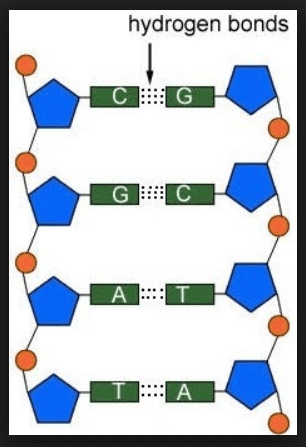
See the way the sugars are "upside down" on the one strand compared to the other? we call that....
Question 8
The goal of [[1]] is to expand knowledge, while the goal of [[2]] is to apply knowledge.
Question 9
Pea plant clones are giving different amounts of water for three-week period. The first pea plant receives 400 milliliters extra water a day. The second pea plant receives 200 milliliters extra water a day. The third pea plant receives 100 milliliters extra water a day. The fourth pea plant does not receive any extra water. The heights of the pea plants are recorded daily. In this scenario, what is the independent variable?
Question 10
What groups do not get what you are testing? It is used as a standard for comparison.
Testing Group
Research Group
Question 11
What is something that is kept the same in the experiment called?
Variable
Constant
Manipulation
Question 12
What is the group that gets what you are testing. You are testing the hypothesis on this group.
Research Group
Standard Group
Question 13
What is the variable that you measure in the experiment?
Constant Variable
Manipulation Variable
Question 14
What is the tentative answer to a research question called?
Conclusion
Variable
Hypothesis
Results
Question 15
A proposed solution to a scientific problem
Question 16
Use of one or more of the senses-sight, hearing, touch, smell, and sometimes taste- to gather information.
Question 17
A specific method by which scientists gain knowledge about the world
Question 18
Scientists performing an experiment influence the results in their favour, or by experimental error in which failure arises due to not considering all the possible variables
Question 19
The experimental factor that is manipulated; the variable whose effect is being studied
Constant Variable
Question 20
Choose the correct branch of biology. It works with internal organs.
Question 21
Choose the correct branch of biology. The study of the interaction between organs and systems and organs' functions.
Physiology
Question 22
Definition of biology.
The study of past events, particularly in human affairs.
Question 23
Choose the correct branch of biology. The study of phenotype such as external form, size, shape, colour and structure of the organisms.
Morphology
Physiology
Question 24
Choose the correct branch of biology. It studies on tissue samples.
Morphology
Question 25
Choose the correct branch of biology. The branch of biology which works with plants.
Question 26
Choose the correct branch of biology. It is the science of identification, nomenclature and classification of organisms.
Taxonomy
Question 27
Choose the correct branch of biology. The study of different cell types.
Taxonomy
Question 28
Choose the correct branch of biology. The branch of biology which deals with the study of animals.
Question 29
Choose the correct branch of biology. The study of living organisms is relation to other organism and their environment.
Question 30
Temperatures around large bodies of water tend to be more moderate than temperatures inland. What properties of water accounts for this?
Water has low salinity.
Water has a higher density than solvents.
Water has the ability to absorb, store, and release large amounts of thermal energy.
Water has polar properties that cause cohesion among individual water molecules.
Question 31
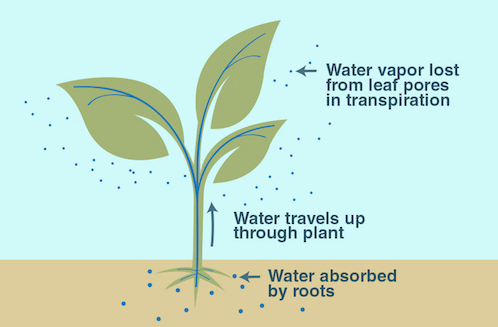
Water is essential for life. Its special properties make water the single most important molecule in plant life. Which of the following properties of water enable it to move from the roots to the leaves of plants?
Water expands as it freezes.
Water is an excellent solvent.
Water exhibits cohesive behavior.
Water is able to moderate temperatures.
Question 32
The Gulf Stream is an ocean current that flows along Florida’s east coast. It has an important moderating effect on the climates of northern latitudes, particularly in Greenland, Canada, and Europe. What property of water makes the climate of these areas milder than they would otherwise be?
Water has a cohesive behavior.
Water has a high specific heat capacity.
Water is polar and dissolve other polar molecules.
Expansion of crystal structure as water freezes.
Question 33
Water has a much higher specific heat than most other covalent compounds. What do you predict might happen if water had a low specific heat instead?
Plants would not have enough water to effectively carry out photosynthesis.
Organisms that are sensitive to changes in temperature would die.
Harmful organisms living in water would reproduce at a rapid rate.
Flooding would occur and animals would be forced to migrate.
Question 34
In winter, a layer of surface ice on lakes helps keep deeper water from freezing. Organisms under the ice can survive. Which property of water allows this to happen?
Water dissolves most substances.
Water decreases in density when solid.
Water has high cohesion and adhesion.
Water has a high degree of surface tension.
Question 35
Which characteristic of a water's molecule results in water's unique features (such as its great ability to dissolve other substances, its high boiling point, and its great surface tension)?
hydrogen and oxygen share electrons equally
hydrogen attract electrons more than oxygen
oxygen attracts electrons more than hydrogen does
hydrogen is the only element without any neutrons
Question 36
Water has unique properties, such as its great ability to dissolve other substances, its high boiling point, and its great surface tension. This unique properties allow water to support life on Earth.
What feature of a water molecules accounts for these very important properties?
hydrogen is the only element without any neutrons
The oxygen atom in the water molecule attracts electrons more than hydrogen does.
The hydrogen atoms in the water molecule attrtact electrons more than oxygen does.
The hydrogen and oxygen atoms share electrons equally.
Question 37
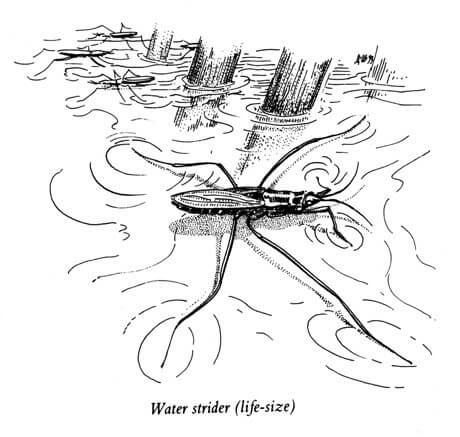
The water strider in the image can walk on water because water has a high surface tension. Which property of water molecules gives water its high surface tension?
Water molecules attract molecules of adjacent surfaces.
Water molecules are farther apart in the solid phase.
Water molecules attract other water molecules.
Water molecules pack together tightly.
Question 38
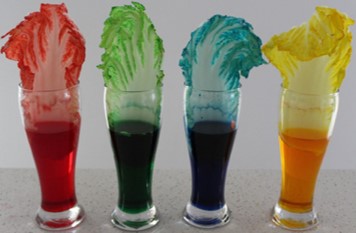
A teacher places some cabbage leaves in water containing different dyes. After a time, the cabbage leaves turn the color of the dye they were placed in as shown in the image below. What process helped the carnations to change color?
water’s ability to form crystals
ability of water to dissolve salts
formation of covalent bonds between hydrogen and oxygen molecules
cohesion and adhesion of water molecules
Question 39
Water is an essential part of all life and considered the universal solvent. Which of the following properties is responsible for this?
Water forms four covalent bonds.
Water is found in all organic molecules.
Water forms nonpolar bonds that attract other similar molecules.
Water forms polar bonds that attract other similar molecules.
Question 40
Water is often called the “universal solvent” because it can dissolve many different kinds of substances. What kinds of substances mix easily with water?
lipids, fats, and oils
ionic and polar substances
nonpolar covalent substances
polar and nonpolar substances
Question 41
Many fish and aquatic plants can survive a cold winter because the layer of ice that forms at the top of a lake insulates the water below and prevents the lake from freezing solid. What unique property of water contributes to this effect?
Water forms hydrogen bonds with ions and other polar substances.
Water molecules completely separate into ions in solution.
Water expands and becomes less dense when it freezes.
Water absorbs heat when it evaporates and forms a gas.
Question 42
Water has both cohesive and adhesive forces that are relatively strong. That is, its molecules are strongly attracted to one another and to many other kinds of molecules. What kind of bond forms between two different water molecules?
covalent bond
ionic bond
hydrogen bond
oxygen bond
Question 43
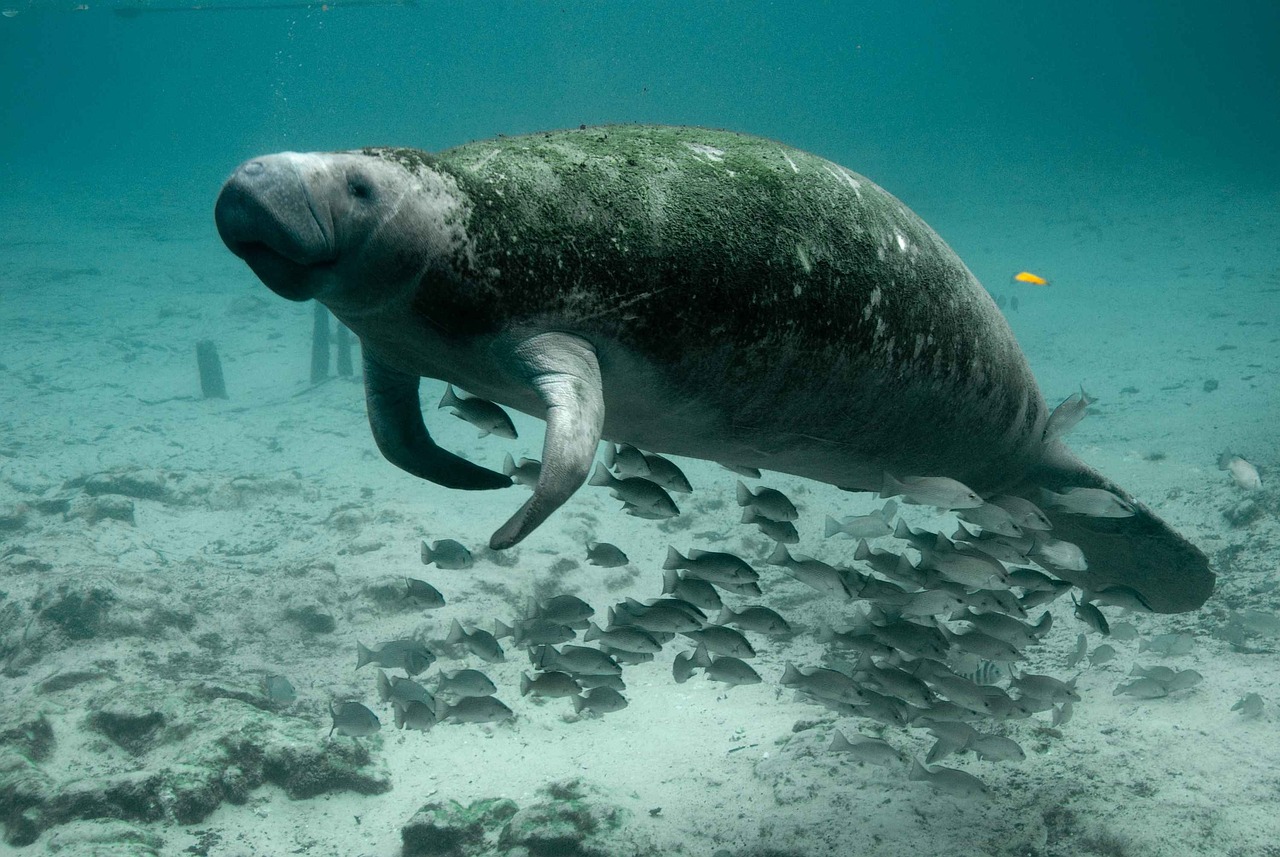
Manatees are able to survive the cold winter months north of Miami by migrating to warmer spring waters that remain 72°C all year around.
Which property of water makes it possible?
Water has a low specific heat.
Water expands when it freezes.
Water has the ability to absorb, store, and release large amounts of thermal energy.
Water has polar properties that cause cohesion among individual water molecules.
Question 44
Water is one of the most important substances for living things. One property of water that makes life on Earth possible is its high specific heat.
How does the high specific heat of water affect the human body?
It moves fluids through arteries and veins.
It allows lighter materials to float in blood.
It makes it possible for substances to dissolve in cells.
It helps the body maintain a constant internal environment.
Question 45
Which of the following is NOT a unique property of water?
Water molecules stick together by cohesion.
Frozen water is less dense than liquid water.
Water molecules stick to other polar substances.
Hydrogen bonds allow water to heat and cool very quickly.
Question 46
Water has the ability to store heat longer than other substances. What benefit does this property of water provide to organisms?
It provides the ability to dissolve nonpolar compounds.
It provides the appropriate catalyst for chemical reactions.
It enables organisms to function with a higher cellular pH.
It allows organisms to maintain a stable internal temperature.
Question 47
All living things need to transport molecules from one place to another in order to carry out necessary life functions. Living things often transport these molecules by dissolving or dissociating them in water and then moving the resulting solution from place to place. What characteristic must a molecule have for it to form a solution in water?
It must be at least as small as the polar water molecules.
It must be nonpolar to be able to react with the polar water molecules.
It must be at least slightly polar to be able to react with the polar water molecules.
It must be covalently bonded in order to form new bonds with the polar water molecules.
Question 48
Once ice forms on a lake in winter, the water underneath the ice remains about 4°C, even if the air temperature just above the ice is far below freezing. What property of water helps keep the water below the ice from freezing?
When covalent bonds form between the water molecules in ice, they give off heat.
Each water molecule stores heat in its covalent bonds during the summer and releases it slowly over the winter.
The hydrogen bonds that form in the ice create a lattice structure, and the resulting extra space enables the ice to act as insulation.
The unstable hydrogen bonds between the water molecules break and push the molecules around, which keeps the water from freezing.
Question 49
Polar bears use floating pieces of sea ice as feeding platforms when hunting seals. What property of water makes this possible?
Salt water is more dense than freshwater.
Solid water is less dense than liquid water.
Oxygen has a higher electronegativity than hydrogen.
Hydrogen has a higher electronegativity than oxygen.
Question 50
Small insects can walk across the surface of calm water. Their feet push the surface of the water down slightly, somewhat like a person walking across a trampoline, but they do not break the surface. What is the best explanation for why this happens?
The insects actually use their wings to hover slightly above the water's surface and they only skim it with their feet.
The insects are light enough so that they do not break the hydrogen bonds holding the water molecules together.
The insects' feet are non-polar, so they are repelled by The polar water molecules and are pushed away from the water's surface.
The insects are small enough to see the individual water molecules, so they are able to step carefully from one molecule to the next.