BIO 024 LEC - Enzymes
This quiz covers the fundamentals of enzymes, including their general characteristics, the role of extremozymes in extreme conditions, and the clinical significance of enzymes in medical diagnosis. It aims to assess your understanding of how enzymes function, adapt, and are utilized in healthcare, particularly in identifying diseases such as myocardial infarction, liver disorders, anemia, prostate cancer, and hypertension. Through these questions, you will integrate basic biochemical knowledge with its practical applications in medicine.

Question 1
Which of the following BEST describes an enzyme?
An organic catalyst that speeds up biochemical reactions
A compound that permanently alters during a reaction
A molecule that slows down metabolic processes
An inorganic substance that initiates reactions
Question 2
A part of an enzyme binds specifically to the substrate:
Apoenzyme
Active site
Cofactor
Holoenzyme
Question 3
The suffix “-ase” in a compound usually indicates it is:
A vitamin
An enzyme
A hormone
A carbohydrate
Question 4
Which class of enzyme catalyzes oxidation–reduction reactions?
Ligases
Isomerases
Oxidoreductases
Transferases
Question 5
Protein portion of a conjugated enzyme:
Holoenzyme
Cofactor
Apoenzyme
Coenzyme
Question 6
Which model of enzyme action describes a rigid fit between enzyme and substrate?
Induced-fit model
Lock-and-key model
Allosteric model
Zymogen model
Question 7
Enzymes are generally made up of:
Lipids
Proteins
Carbohydrates
Nucleic acids
Question 8
Which factor, if increased too much, causes enzyme denaturation?
Substrate concentration
Temperature
Enzyme concentration
Two of the choices
Question 9
Which type of specificity means the enzyme acts only on one substrate?
Group specificity
Stereochemical specificity
Absolute specificity
Linkage specificity
Question 10
The optimal temperature for most human enzymes is approximately:
25°C
30°C
37°C
40°C
Question 11
Which enzyme catalyzes the hydrolysis of proteins?
Lipase
Protease
Amylase
Oxidase
Question 12
An apoenzyme plus its cofactor forms a(n):
Proenzyme
Holoenzyme
Isoenzyme
Zymogen
Question 13
Which enzyme class is responsible for transferring phosphate groups?
Ligases
Isomerases
Transferases
Hydrolases
Question 14
Which digestive enzyme works best at pH 2?
Pepsin
Trypsin
Amylase
Lipase
Question 15
Which type of inhibition involves permanent enzyme inactivation by covalent bonding?
Reversible competitive inhibition
Reversible noncompetitive inhibition
Irreversible inhibition
Allosteric inhibition
Question 16
Which enzyme class rearranges the atoms within a molecule?
Oxidoreductase
Isomerase
Hydrolase
Ligase
Question 17
Which enzyme is secreted as an inactive zymogen?
Pepsin
Pepsinogen
Amylase
Lipase
Question 18
What effect does extreme pH have on enzyme activity?
Stabilizes tertiary structure
Enhances activity permanently
Causes denaturation and loss of function
Increases substrate binding
Question 19
Enzymes from organisms living in hot springs that can survive at very high temperatures are called:
Thermophiles
Cryophiles
Halophiles
Piezophiles
Question 20
What happens to human enzymes at very high fever (>40°C)?
Their activity doubles
They become vitamins
They denature and lose function
They act as antibiotics
Question 21
Which diagnostic enzyme level is often elevated after a heart attack (myocardial infarction)?
Aspartate Aminotransferase
Lactate dehydrogenase
Alkaline phosphatase
Renin
Question 22
The enzyme urease is medically used to measure blood levels of:
Glucose
Urea
Lipids
Calcium
Question 23
A marked increase in alkaline phosphatase is most useful in diagnosing:
Muscular dystrophy
Liver and bone disease
Hypertension
Leukemia
Question 24
Racemases are classified as:
Oxidoreductases
Transferases
Isomerases
Ligases
Question 25
This enzyme facilitates removal of CO2 from a substrate:
Dehydratases
Decarboxylases
Deaminases
Hydratases
Question 26
What happens to the state of electron when there is reduction in REDOX reaction?
An electron is gained.
An electron is lost.
There is no change in the state of electron.
None of the choices.
Question 27
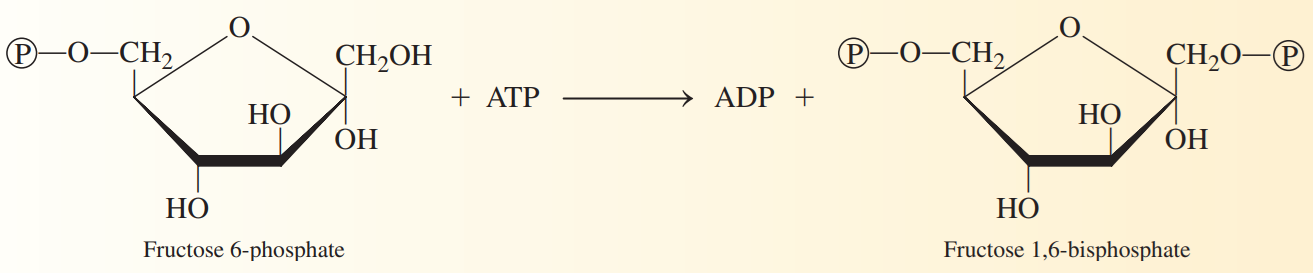
Refer to the image below. What main enzyme class catalyzes the chemical reaction?
Ligase
Transferase
Hydrolase
Lyase
Question 28
Refer to the image below. What main enzyme class catalyzes the chemical reaction?
Ligase
Transferase
Hydrolase
Oxidoreductase