
4.1 Oscillations

Question 1
What is true about the acceleration of a particle that is oscillating with simple harmonic motion (SHM)?
It is in the opposite direction to its velocity
It is decreasing when the potential energy is increasing
It is proportional to the frequency of the oscillation
t is at a minimum when the velocity is at a maximum
Question 2
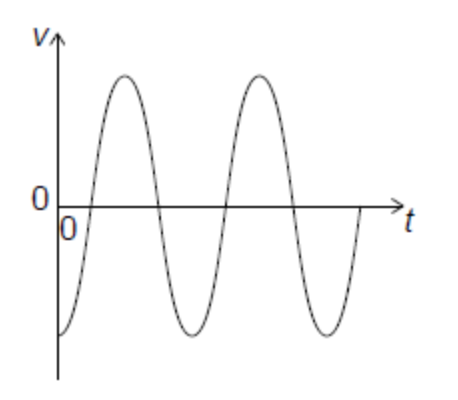
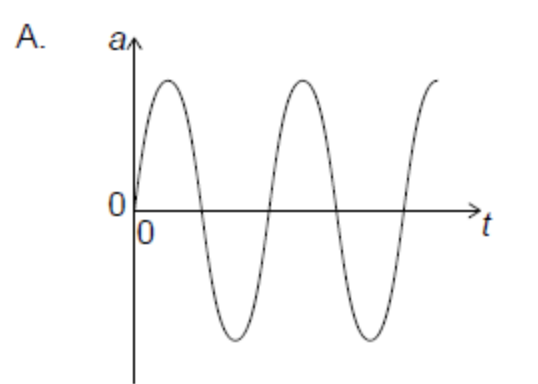
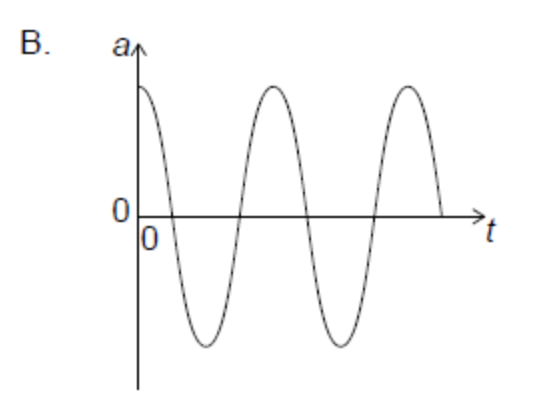
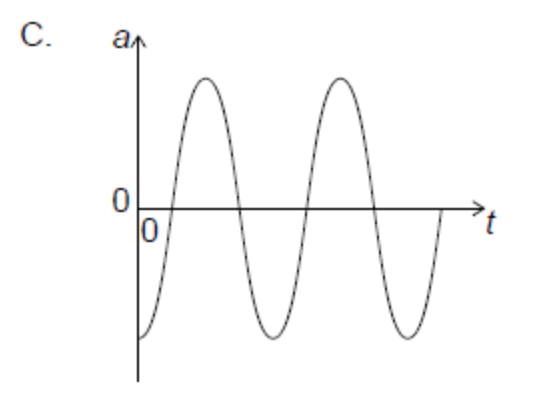
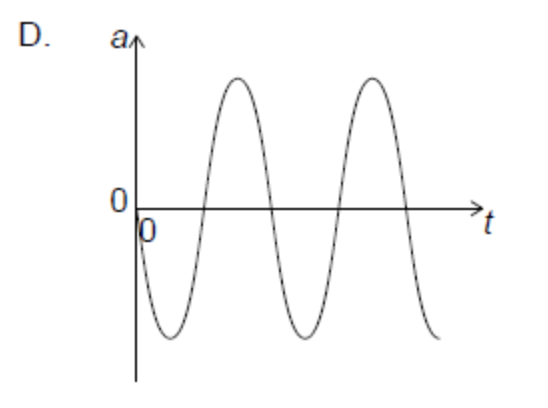
A particle undergoes simple harmonic motion (SHM). The graph shows the variation of velocity v of the particle with time t. What is the variation with time of the acceleration a of the particle?
Question 3
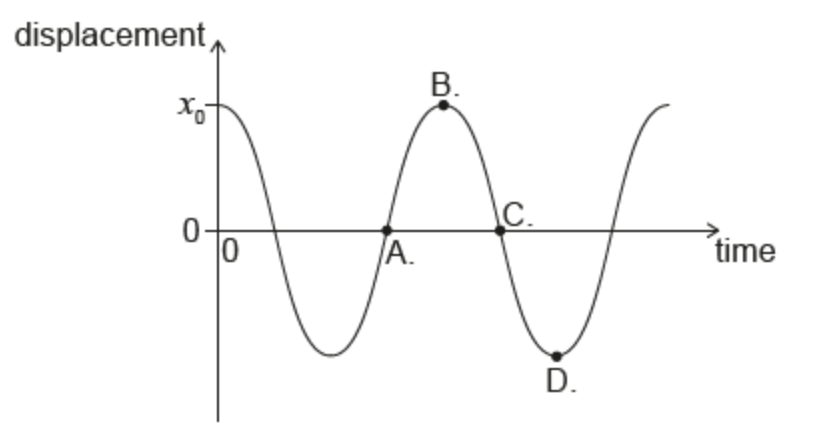
The bob of a pendulum has an initial displacement
to the right. The bob is released and allowed to oscillate. The graph shows how the displacement varies with time. At which point is the velocity of the bob at its maximum magnitude directed towards the left?
A
B
C
D
Question 4
A particle performs simple harmonic motion (SHM). What is the phase difference between the displacement and the acceleration of the particle?
0
Question 5
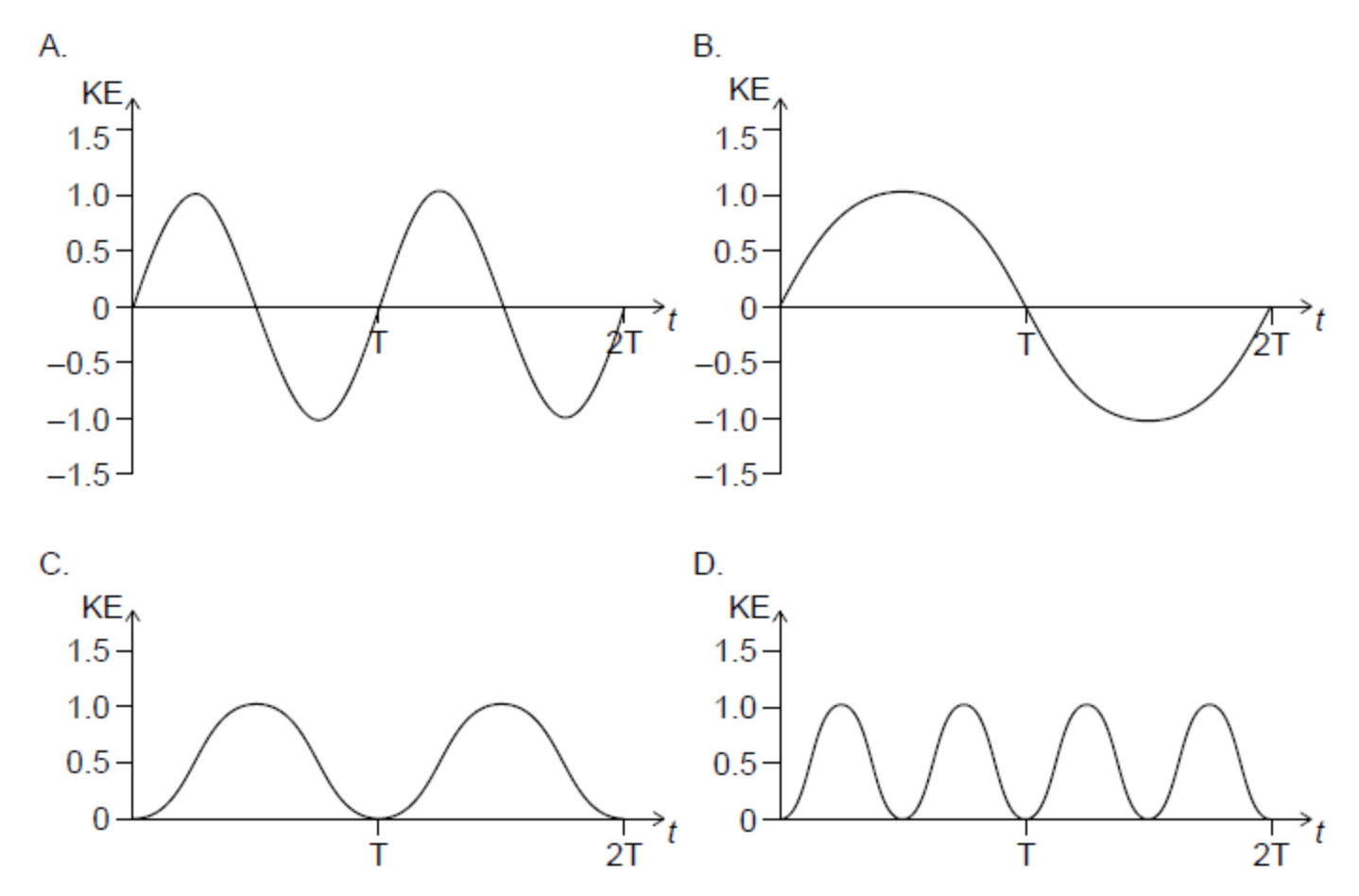
Which graph shows the variation with time t of the kinetic energy (KE) of an object undergoing simple harmonic motion (shm) of period T?
Graph A
Graph B
Graph C
Graph D
Question 6
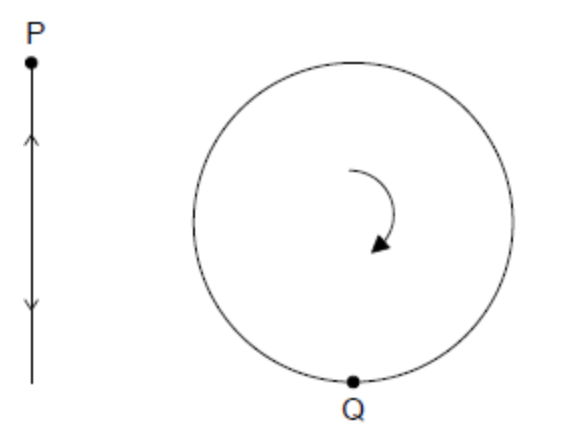
Object P moves vertically with simple harmonic motion (shm). Object Q moves in a vertical circle with a uniform speed. P and Q have the same time period T. When P is at the top of its motion, Q is at the bottom of its motion. What is the interval between successive times when the acceleration of P is equal and opposite to the acceleration of Q?
Question 7
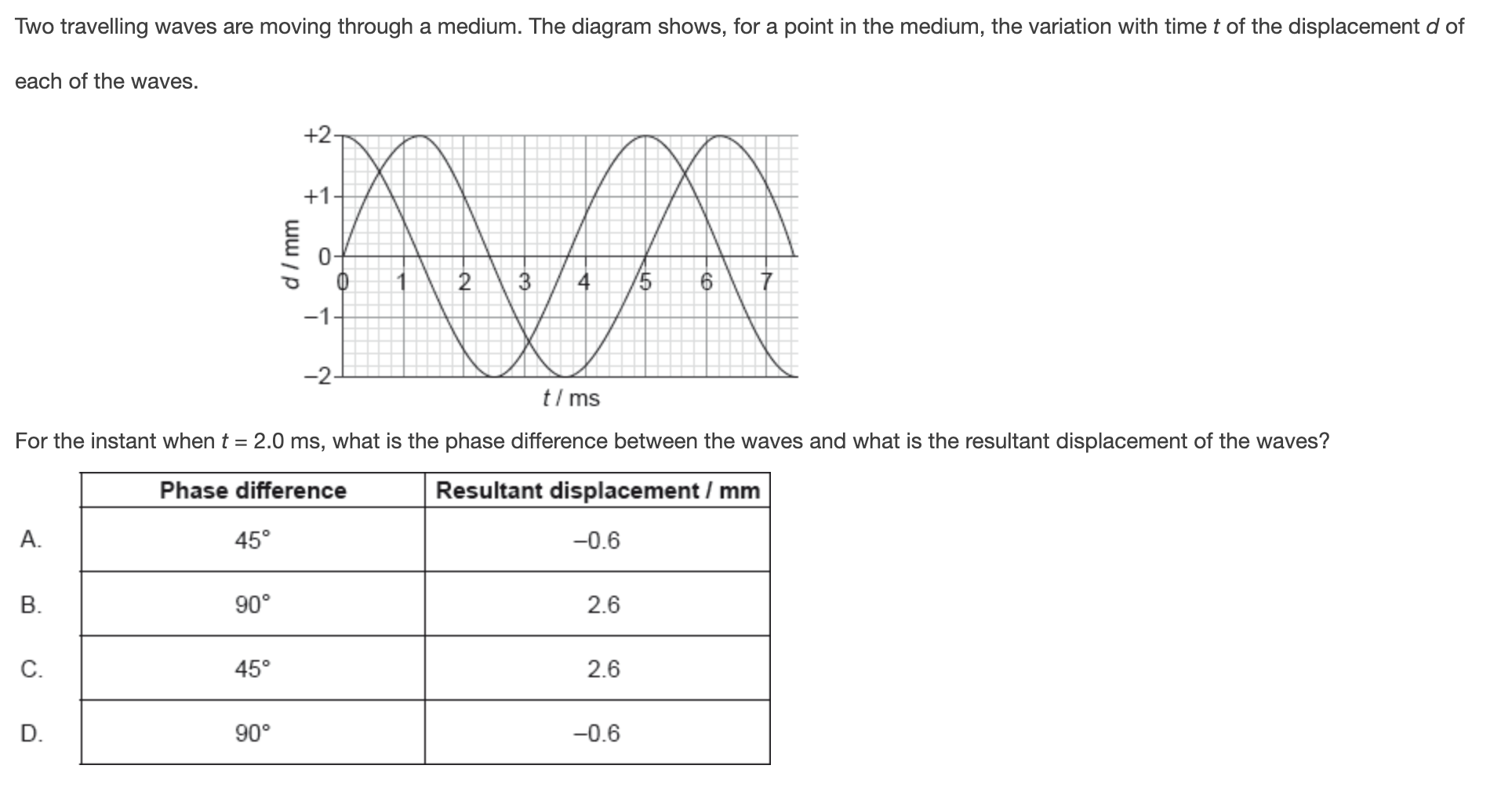
Two travelling waves are moving through a medium. The diagram shows, for a point in the medium, the variation with time t of the displacement d of each of the waves. For the instant when t = 2.0 ms, what is the phase difference between the waves and what is the resultant displacement of the waves?
Answer A
Answer B
Answer C
Answer D
Question 8
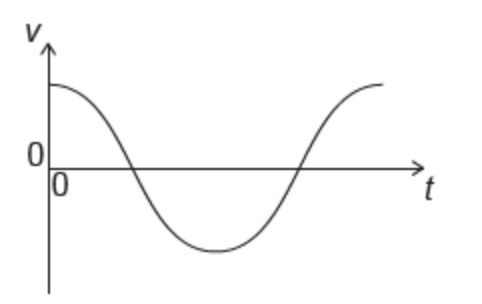
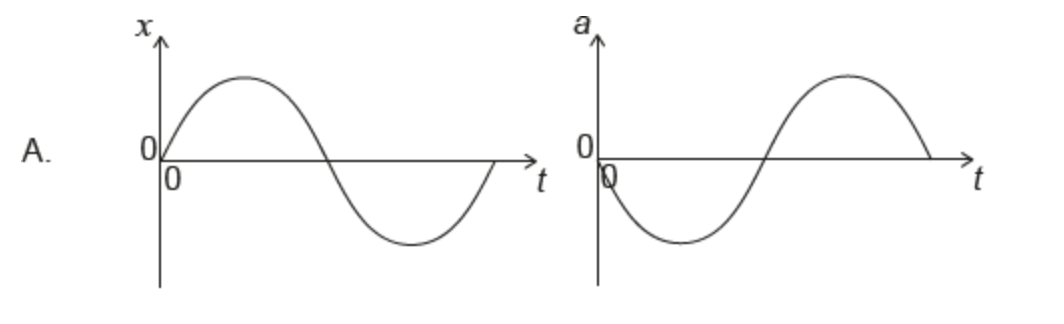
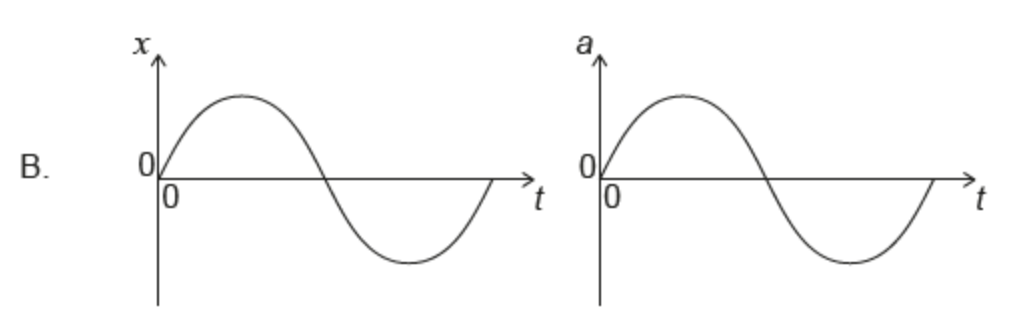
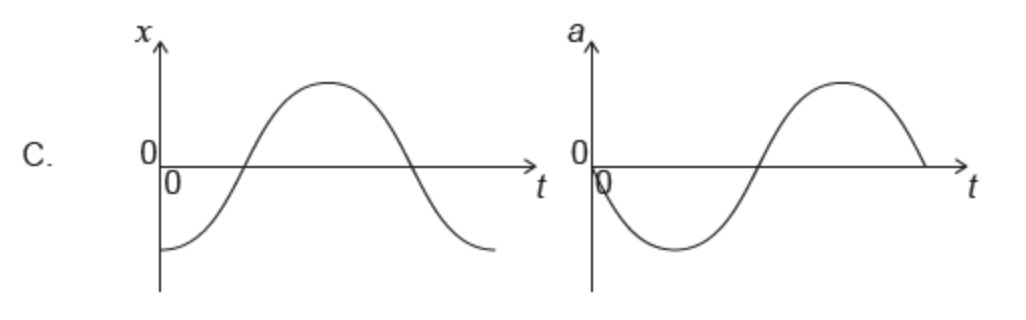
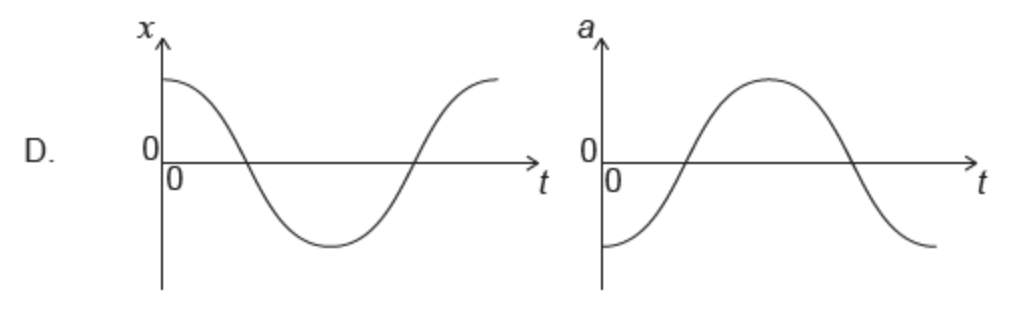
An object performs simple harmonic motion (SHM). The graph shows how the velocity v of the object varies with time t. The displacement of the object is x and its acceleration is a. What is the variation of x with t and the variation of a with t?
A
B
C
D
Question 9
A system that is subject to a restoring force oscillates about an equilibrium position.
For the motion to be simple harmonic, the restoring force must be proportional to
the amplitude of the oscillation.
the displacement from the equilibrium position.
the potential energy of the system.
the period of the oscillation.