
Newton’s Laws of Motion

Question 1
An object or a person can apply force to another object or person.
True
False
Question 2
The direction of acceleration is the same as the direction of the deceleration.
True
False
Question 3
Newton’s second law lets you predict what combination of ______ and _________ you need to get the acceleration you need.
acceleration and deceleration
force and mass
Inertia and force
newton and mass
Question 4
Forces are measured in a unit called power (P).
True
False
Question 5
Newton summarized his findings in two laws of motion.
True
False
Question 6
The tendency of an object to resist a change in motion is called inertia.
True
False
Question 7
Newton’s first law of motion states that if the net force acting on an object is zero, the motion of the object does not change.
True
False
Question 8
When the forces acting on an object are balanced, the object is either accelerating or decelerating with a constant velocity.
True
False
Question 9
Unbalanced forces will not cause an object to accelerate or decelerate.
True
False
Question 10
Unbalanced forces will not cause an object to change direction.
True
False
Question 11
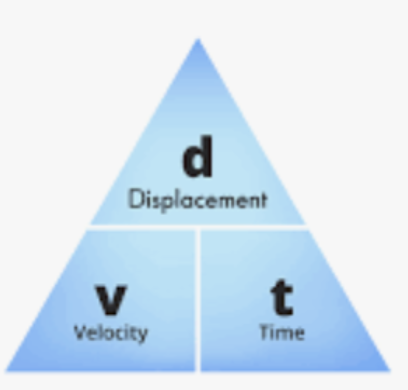
Newton’s second law of motion states that velocity is the speed and direction of an object’s motion.
True
False
Question 12
The direction of acceleration is the same as the direction of the net force.
True
False
Question 13
Newton’s third law of motion says that when one object exerts a force on a second object, the second object exerts a force of the same size, but in the opposite direction, on the first object.
True
False
Question 14
When two objects apply forces on each other, one of the forces is called the action force, and the other is called the reaction force.
True
False
Question 15
When two objects exert forces on each other, the two forces are balanced forces.
True
False
Question 16
Balanced forces combine or cancel each other out because they act on the same object. Each force in a force pair acts on a different object.
True
False
Question 17
When the forces applied to an object act in the same direction, the net force is the subtraction of the individual forces.
True
False
Question 18
The net force is the sum of the positive forces only.
True
False
Question 19
If you apply a force of 1.5 N to a ball with a mass of 0.3kg. What is the ball's acceleration?
3 m/s^2
4 m/s^2
5 m/s^2
6 m/s^2
Question 20
If you apply a force of 1.5 N to a ball with a mass of 0.6 kg. What is the ball's acceleration?
2.5 m/s^2
3 m/s^2
3.5 m/s^2
4 m/s^2