Sexual Reproduction and Meiosis + DNA and Genetics

Question 1
The female sex cell, an egg, forms in which part of the reproductive system?
Question 2
The male sex cell, a sperm, forms in which part of the reproductive system?
Question 3
Sexual reproduction is a type of reproduction in which the genetic materials from two different cells combine, producing of what?
Question 4
During a process called fertilization, an egg cell and a sperm cell join together to create what?
Question 5
Diploid cells are cells that have pairs of chromosomes.
Question 6
A human egg has how many chromosomes?
Question 7
Pairs of chromosomes that have genes for the same traits arranged in the same order are called what?
Question 8
Different organisms have the same number of chromosomes
Question 9
Humans have how many number os chromosomes?
Question 10
Cells that have only one chromosome from each pair of chromosomes are called what?
Question 11
There are four phases in Meiosis I. Correctly name all the phases in Meiosis I.
Question 12
In which phases of Meiosis I where Homologous chromosomes separate and are pulled to opposite ends of the cell?
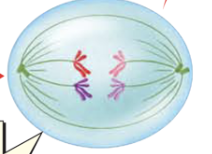
Question 13
In which phases of Meiosis I where Homologous chromosomes line up along the center of the cell and spindle fibers attach to each chromosome?
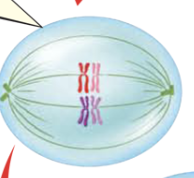
Question 14
In which phases of Meiosis I where Nuclear membrane breaks apart and Chromosomes condense forming homologous pairs?
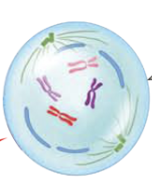
Question 15
In which phases of Meiosis I where the Nuclear membrane form around each set of chromosomes and the cytoplasm divides, forming two daughter cells?
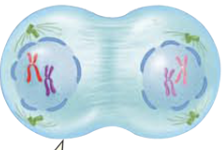
Question 16
Mitosis forms sex cells used for sexual reproduction.
Question 17
Sugar-phosphate groups form adenine (A), cytosine (C), thymine (T), and guanine (G).
Question 18
Chromosomes are made of what?
Question 19
Adenine (A) will bond to which one of the below?
Question 20
Guanine (G) will bond to which one of the below?
Question 21
DNA is shaped like a twisted ladder which is referred to as what?
Question 22
Which is the first step in making a protein.
Question 23
DNA is a complex molecule that contains the code for
Question 24
RNA carries the codes for making what?
Question 25
An organism’s nucleotide sequence can change through the deletion, insertion, or substitution of nitrogen bases.