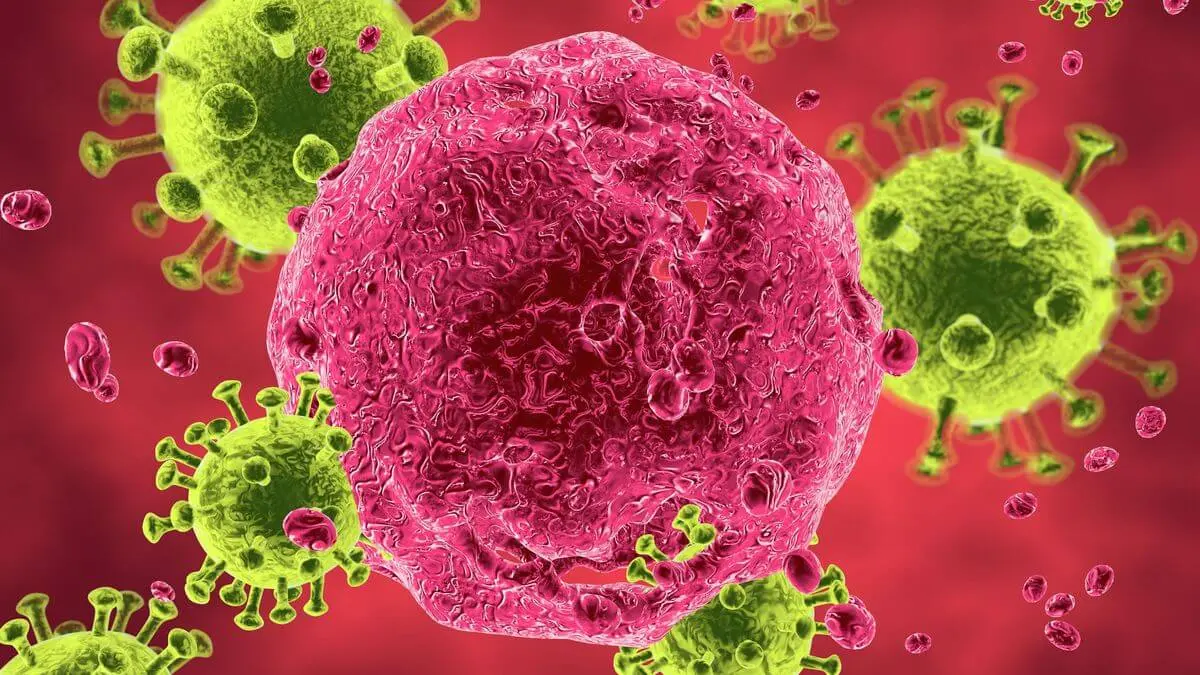
Immunodeficiency Diseases - HIV/AIDS
[Deleted Account]
•over 6 years agoQuestion 1
The two types of immunodeficiency disease are: ________________________ = a child is born with the condition due to a genetic defect or or developmental abnormality ________________________ = an aquired condition due to an extrernal factor (e.g. severe stress or malnutrition, viral infection)
Question 2
Match which type of immunodeficiency disease the following examples are: (may need some research!) A) HIV/AIDS B) alymphocytosis C) leukaemia D) immunodeficiency due to starvation
Question 3
HIV and AIDS stand for:
Question 4
HIV targets ______+ cells. These are cells of the immune system, and the _______ molecule is important for leukocytes which are involved in APC interactions - and is therefore closely linked to MHC class I. (example cells = T helper cells, macrophages and dendritic cells)
Question 5
Once the HIV virus has bound with the CD4 molecule and a co-receptor, it gains entry into the leukocyte. HIV is an enveloped _____ retrovirus which means it injects its strand of _____ into the cell, and the cell then reverse transcribes the _____ into a strand of _____.
Question 6
TRUE or FALSE... After the RNA has been reverse transcribed into DNA, this proviral DNA is then integrated into the host's DNA. However, the virus will not be created inside the T helper cell unless the host is infected. This is because a T helper cell will only start to proliferate (clone itself) once it is activated due to a matching antigen.
Question 7
The initial infection of HIV is known as "______________ infection" and means that the HIV virus is initially inside macrophages, T helper cells, and dendritic cells. The ______________ , which are numerous in the epithelial and mucosal tissues (the common sites of infection), then migrate to the ________________ where they pass present the virus to other cells = spread of HIV.
Question 8
TRUE or FALSE: This initial acute phase of infection causes a small increase in the numbers of HIV in the system, but the immune system then fights back and reduced the amount of virus. However, during the chronic stage of infection, there is a rapid increase in the amount of HIV in the body. This can last for between 2 to 10 years (without medical intervention).
Question 9
During the chronic stage of HIV, the body loses about _______________________ helper T cells per day.
Question 10
As HIV progresses through the chronic stage, the number of HIV virus ____________________ and so there is a corresponding _____________________ in the number of helper T cells.
Question 11
TRUE or FALSE As HIV increases and helper T cell count decreases, the body is still able to fight most pathogens/infections as long as the T cell count remains above 500 cells/mm^3. However, if the T cell count falls below 200 cell/mm^3, patients start experiencing symptoms such as: swollen lymph nodes, watch patches on the tongues, and yeast infection in the mouth.
Question 12
Once the patient's T cell count falls below _________ cells/mm^3, the immune system becomes severly compromised and _______________ progresses to ______________.
Question 13
TRUE or FALSE: The AIDS patient is now at risk from infections that would normally be fended off easily by a healthy immune system, such as bacterial pneumonia and fungal infections. These are common causes of death in AIDS patients.
Question 14
The HIV virus is present in the body fluids of HIV-positive people. - including: - but not including:
Question 15
There is no cure for HIV or AIDS (hence it is a permanent secondary immunodeficiency). However, treatment focus on the fact that HIV is a retrovirus and so blocks necessary process that HIV relies on to spread = "Antiretroviral therapy" (ART) and includes a combination of medicines. Which of the following is not a process that needs to be blocked for the action of a retrovirus