Inference Task 2
[Deleted Account]
•about 7 years agoQuestion 1
What is an inference? Writers of fiction often show their characters in action and allow them to speak for themselves. Readers then have the job of deciding what those actions and words mean and what they reveal about the characters, the events of the story and the message the author intends to send. In other words, readers must draw inferences about what they read. An inference in fiction is a reasonable conclusion or judgment about some element of a story based on the information given in the story and the reader's personal knowledge of how the world works.
Question 2
What is an inference? Writers of fiction often show their characters in action and allow them to speak for themselves. Readers then have the job of deciding what those actions and words mean and what they reveal about the characters, the events of the story and the message the author intends to send. In other words, readers must draw inferences about what they read. An inference in fiction is a reasonable conclusion or judgment about some element of a story based on the information given in the story and the reader's personal knowledge of how the world works.
Question 3
Does drawing an inference requires your background knowledge and information from the text? How to Draw Inferences 1. You look for clues in the text, little pieces of information that seem to relate to the missing information or your question. 2. You think about what you already know from your own experience in the real world. 3. You put these two pieces of the puzzle together in a logical way to produce a reasonable conclusion that supplies the missing piece of information or the answer to your question.
Question 4
Do you draw many inferences in your everyday life? Drawing an Inference You've made many inferences in your life, but you might not even know it. For instance, your cat runs up to you the minute you step through the door. She meows, rubs your legs, runs into the kitchen and stares at the cupboard where you normally store the cat food. It doesn't take much effort to figure out that your cat wants food. You've just drawn an inference.
Question 5
Drawing an inference from a book follows the same process of drawing inferences in your everyday life? Drawing Inferences Let's go back to your cat and apply the process for making an inference. At first, you might wonder what your cat is doing. You look for clues in your cat's behavior and notice how she meows and rubs your legs to get your attention and how she stares at the food cupboard. You also think about what you already know from past experience; your cat has done this before, and you've responded by giving her food. So you put those two pieces together in a logical way and correctly infer that your cat wants food.
Question 6
Which of the following statements is true?
Question 7
____ in fiction is a reasonable conclusion or judgment about some element of a story based on the information given in the story and the reader's personal knowledge of how the world works.
Question 8
What is the first step readers must take to draw an inference?
Question 9
What is the second step readers must take to draw an inference?
Question 10
What is the third step readers must take to draw an inference?
Question 11
The reader can conclude that Mr. Hyde... “But for all that,” continued the lawyer, “there’s one point I want to ask. I want to ask the name of that man who walked over the child.” “Well,” said Mr. Enfield, “I can’t see what harm it would do. It was a man of the name of Hyde.” “Hm,” said Mr. Utterson. “What sort of a man is he to see?” “He is not easy to describe. There is something wrong with his appearance; something displeasing, something down-right detestable. I never saw a man I so disliked, and yet I scarce know why. He must be deformed somewhere; he gives a strong feeling of deformity, although I couldn’t specify the point. He’s an extraordinary looking man, and yet I really can name nothing out of the way. No, sir; I can make no hand of it; I can’t describe him. And it’s not want of memory; for I declare I can see him this moment.”
Question 12
What did Mr. Hyde do? “But for all that,” continued the lawyer, “there’s one point I want to ask. I want to ask the name of that man who walked over the child.” “Well,” said Mr. Enfield, “I can’t see what harm it would do. It was a man of the name of Hyde.” “Hm,” said Mr. Utterson. “What sort of a man is he to see?” “He is not easy to describe. There is something wrong with his appearance; something displeasing, something down-right detestable. I never saw a man I so disliked, and yet I scarce know why. He must be deformed somewhere; he gives a strong feeling of deformity, although I couldn’t specify the point. He’s an extraordinary looking man, and yet I really can name nothing out of the way. No, sir; I can make no hand of it; I can’t describe him. And it’s not want of memory; for I declare I can see him this moment.”
Question 13
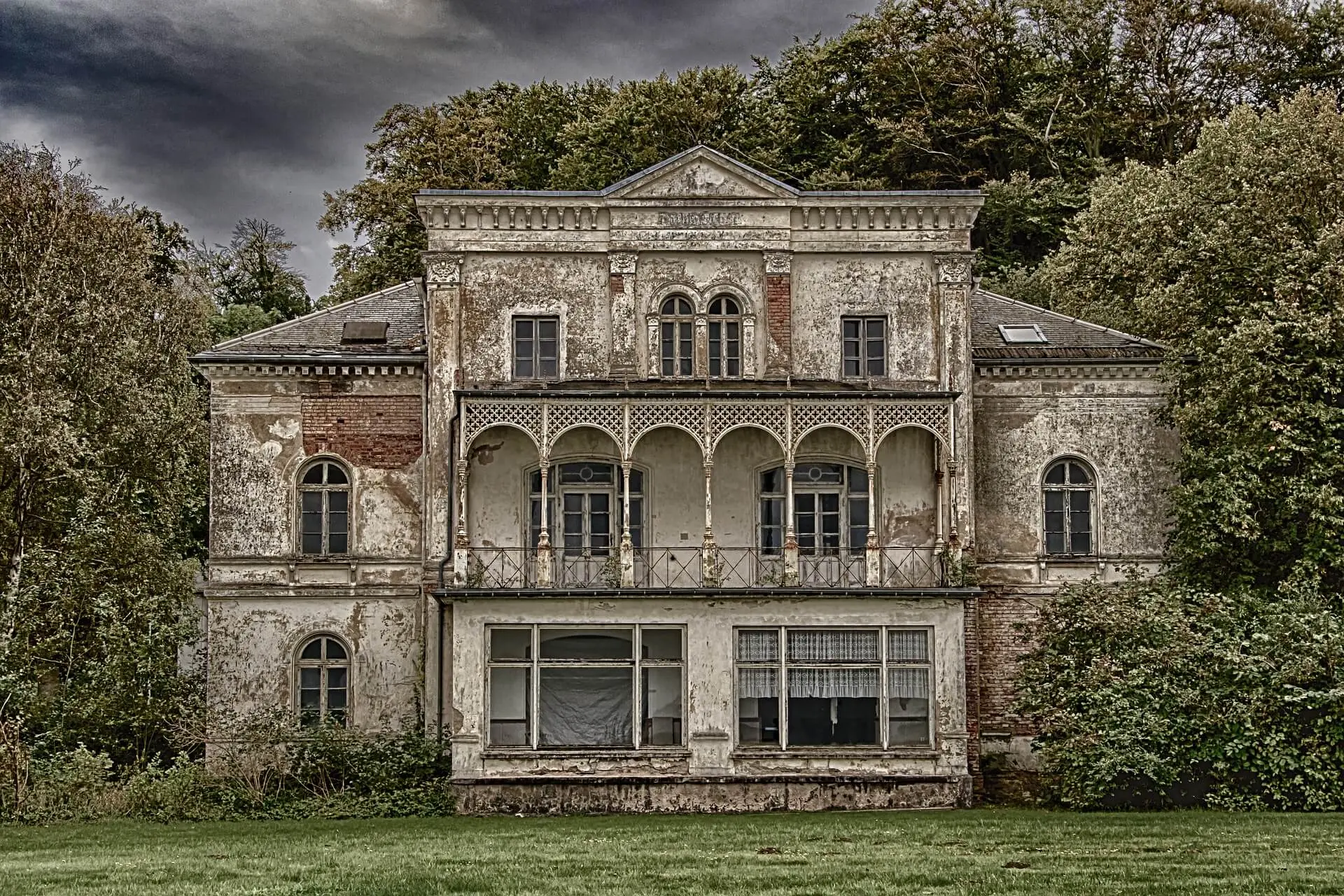
How does ‘Wuthering’ describe the house? Wuthering Heights is the name of Mr. Heathcliff’s dwelling. ‘Wuthering’ being a significant provincial adjective, descriptive of the atmospheric tumult to which its station is exposed in stormy weather. Pure, bracing ventilation they must have up there at all times, indeed: one may guess the power of the north wind blowing over the edge, by the excessive slant of a few stunted firs at the end of the house; and by a range of gaunt thorns all stretching their limbs one way, as if craving alms of the sun. Happily, the architect had foresight to build it strong: the narrow windows are deeply set in the wall, and the corners defended with large jutting stones. Before passing the threshold, I paused to admire a quantity of grotesque carving lavished over the front, and especially about the principal door. I would have made a few comments, and requested a short history of the place from the surly owner; but his attitude at the door appeared to demand my speedy entrance, or complete departure.
Question 14
How does the setting mirror its owner? Wuthering Heights is the name of Mr. Heathcliff’s dwelling. ‘Wuthering’ being a significant provincial adjective, descriptive of the atmospheric tumult to which its station is exposed in stormy weather. Pure, bracing ventilation they must have up there at all times, indeed: one may guess the power of the north wind blowing over the edge, by the excessive slant of a few stunted firs at the end of the house; and by a range of gaunt thorns all stretching their limbs one way, as if craving alms of the sun. Happily, the architect had foresight to build it strong: the narrow windows are deeply set in the wall, and the corners defended with large jutting stones. Before passing the threshold, I paused to admire a quantity of grotesque carving lavished over the front, and especially about the principal door. I would have made a few comments, and requested a short history of the place from the surly owner; but his attitude at the door appeared to demand my speedy entrance, or complete departure.